Algeria sends troops to Niger to guard $25 billion in state oil assets
The parliament ratified the deployment after a unanimous vote in the upper house, marking a shift from the country's traditional noninterventionist policy.
By Emmanuel Ellis ·
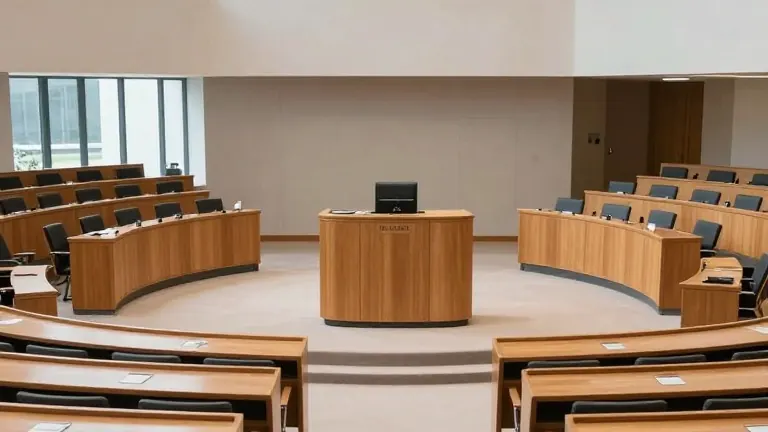
Algeria spent more than 25 billion dollars on its armed forces in 2025, making it the largest military spender in Africa. The country is now deploying a portion of that force to its neighbor Niger to protect state-owned oil facilities. The lower house of the Algerian parliament, the People's National Assembly, ratified the deployment proposal on Sunday. This followed a unanimous approval by the upper house, the Council of the Nation, earlier that day.
The specific number of soldiers and the exact timeline for their arrival have not been released. The move follows a diplomatic thaw between Algiers and Niamey. Niger’s President Abdourahamane Tchiani visited Algeria in February. Months later, Defense Minister Salifou Mody traveled to Algiers to discuss security cooperation. These visits occurred after a period of tension that began in April when the Algerian army shot down a Malian drone, leading Niger, Mali, and Burkina Faso to recall their ambassadors.
Algerian authorities previously described an attempt to destabilize Niger’s military-led government. In response, Algeria dispatched four Russian-made Sukhoi Su-30 jets, a transport aircraft, and an aerial refueling aircraft to Niamey nearly two months ago. The current deployment is intended to safeguard economic interests. The Associated Press reported that troops would be sent to protect Algeria’s economic and strategic interests, particularly its oil facilities in Niger.
Senator Belkacem Boulghiti provided details on the mission's scope. He stated that the soldiers are not being sent to wage war. Instead, they are on a mission to secure economic infrastructure. He described the move as an adaptation of military doctrine to evolving circumstances in the Sahel region. This area stretches from the Atlantic Ocean to the Red Sea and includes several countries along Algeria’s southern border.
The deployment aligns with a 2020 constitutional revision. Article 91 allows the president to authorize overseas deployments if they receive backing from at least two-thirds of the members in each chamber of parliament. Historically, Algerian forces have rarely operated beyond their borders since the 1973 Arab-Israeli war. The constitution also permits participation in peacekeeping operations under the United Nations, African Union, and Arab League.
The decision occurs amid shifting alliances in the Sahel. France withdrew its troops from Mali in August 2022, Burkina Faso in February 2023, and Niger in December 2023. Niger demanded the departure of approximately 1,500 French soldiers after its July 2023 coup. In April 2024, about 100 Russian military personnel arrived in Niamey. These personnel are associated with Africa Corps, a paramilitary group close to the Kremlin.
The United States also reduced its presence. In 2024, Washington withdrew approximately 1,000 soldiers from Niger after the military government ended their security cooperation agreement. This included personnel stationed at a drone base near Agadez. Algeria also severed diplomatic relations with the United Arab Emirates in September. Algiers accused Abu Dhabi of hostile and provocative actions without providing specific details.
Instability in the Sahel has roots in the collapse of Muammar Gaddafi’s government in Libya in 2011. Weapons and armed fighters, including Tuareg who had served in Libya, spread into neighboring countries. This helped fuel a rebellion in northern Mali in 2012. Over the following decade, armed conflict expanded across Mali, Burkina Faso, and Niger. Since 2012, these three nations have experienced six military coups.
Algeria shares thousands of kilometers of borders with Mali, Niger, and Libya. The country warned in 2011 that the disintegration of the Libyan state could destabilize its neighbors. That concern has materialized in the current security crisis. The proposed deployment to Niger also aims to protect the Trans-Saharan Gas Pipeline. This project would transport Nigerian gas to Europe and traverse both Niger and Algeria.
Source: Al Jazeera
More Business · Bad Service · Report a business · Got a Story?