Palestinian Voters in Israel Break Historical Turnout Records
Participation in Arab towns exceeded 70%, creating a path to block Prime Minister Netanyahu from securing a parliamentary majority.
By Zoe Ruiz ·
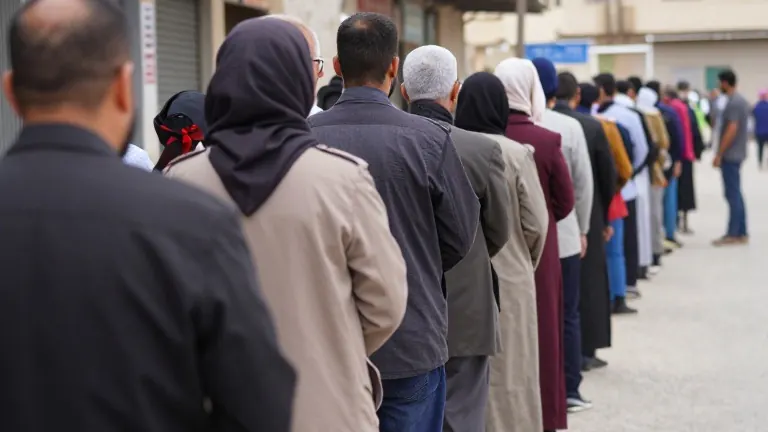
Palestinian citizens of Israel cast ballots in record numbers during recent parliamentary elections, with some towns reporting participation rates above 70 percent. This sharp increase stands in contrast to historical trends in Arab municipalities, where turnout has typically ranged between 45 and 65 percent in recent years. The surge in voting power now poses a direct challenge to Prime Minister Benjamin Netanyahu and his right-wing coalition.
Several policy moves by the current government appear to have driven this engagement. These include efforts by Jewish settlers to establish an outpost on Palestinian land in Majd al-Krum in the Upper Galilee. Hussein Manna, a resident of Majd al-Krum, noted that the move provoked those who had previously been indifferent to the process. He stated that voters understand the consequences if the current administration returns to power.
Preliminary reports indicate that the Joint List and the United Arab List could secure up to 17 seats combined. This total is sufficient to prevent Netanyahu from reaching the 61-seat majority required to form a government. Walid al-Omari, bureau chief for Al Jazeera in Palestine, described the outcome as fateful for the state’s identity. He warned that if Netanyahu’s coalition remains in power, the country will move further toward extremism.
Ahmad Tibi, head of the Arab Movement for Renewal, stated that the primary goal is to bring down the government of Netanyahu, Smotrich, and Ben-Gvir. He criticized the stance of opposition leaders who have ruled out alliances with Arab parties. Tibi called this position racist and said the Arab parties are ready to cooperate to prevent Netanyahu from leading a transitional government.
In exchange for support, the Arab parties demanded that the next government exclude the far-right ministers. Tibi said the alternative government would not be a government of peace, but it would lack the ministers he identified as racist. He added that this new administration would need to address issues such as crime, home demolitions, and the occupation.
Netanyahu and his allies launched a campaign warning their base about high Arab turnout. Netanyahu posted AI-generated images of Arab voters, a move the Joint List condemned as misleading. Reports emerged that right-wing activists deployed to polling stations in towns like Taibe and Tira to slow down the process. Tibi observed that the community showed determination to stay until voting was complete despite the long queues.
If Gadi Eisenkot’s Yashar party wins 53 seats and the United Arab List wins eight, a 61-member coalition can be formed. Al-Omari noted this specific combination would allow for a government without the current right-wing leadership. The result carries implications for ongoing military engagements in the region, as Netanyahu bears responsibility for the security failure on October 7 that opened the doors to these wars.
Source: Al Jazeera