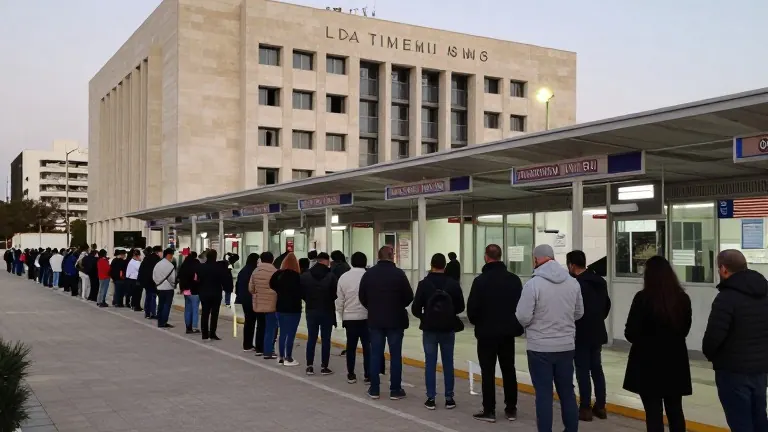
French Students Protest as Education Spending Falls by a Fifth
With national debt at 119 percent of GDP and a projected 5.4 percent deficit, the government faces a fiscal squeeze that limits its ability to fund the schools at the center of the current unrest.
By Zoe Ruiz ·
The public budget for higher education, student life, and research has decreased by 20 percent since 2017, according to data published by Lucas Chancel, co-director of the World Inequality Lab. This decline in real terms, adjusted for inflation and student numbers, forms the financial backdrop to the nationwide protests that have gripped France this fall.
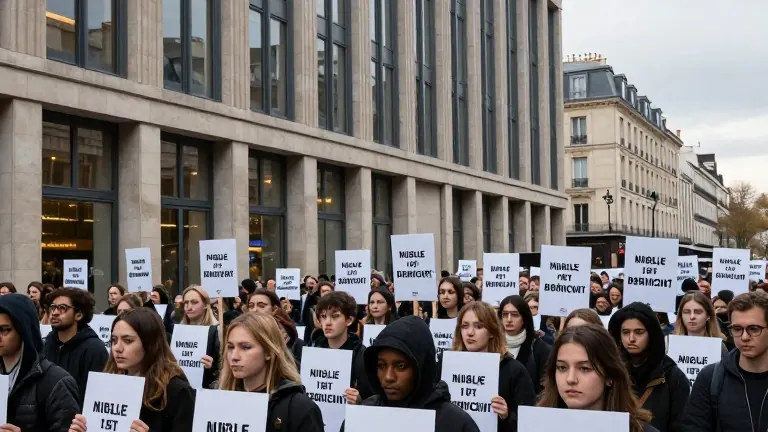
The Ministry of Interior reported that 410,000 people demonstrated across the country on Saturday. Of that total, 110,000 gathered in Paris. The movement began in mid-September when high school students blockaded campuses. Citing overcrowded classrooms with 32 to 35 pupils per room, unreplaced teacher absences, and crumbling infrastructure, the students demanded immediate infrastructure repairs and stable staffing.
Teachers joined the student ranks over pay disparities. The Organisation for Economic Co-operation and Development reported that French teachers earn a gross annual salary of 41,968 euros. In Germany, the figure is 69,453 euros. Social taxes and pension contributions further reduce the monthly income of French educators, who are now protesting alongside students who fear bearing the brunt of public spending cuts.
President Emmanuel Macron met with student representatives for the first time on Friday. The meeting ended without a resolution, as student leaders called for further mobilization until the government presents concrete actions. Macron later stated in Marseille that he has asked his cabinet to address the root causes of the movement. The government is also expected to announce changes to Parcoursup, the national online university admissions platform.
The government’s response has been constrained by a severe fiscal crisis. France’s national debt has reached approximately 3.6 trillion euros, equivalent to 119 percent of gross domestic product. The 2026 deficit is projected to hit 5.4 percent of GDP, well above the European Union average of just over 3 percent. Prime Minister Sebastien Lecornu acknowledged the anger of young people in an address on October 7 and promised a plan by the end of the month.
A January 2026 review by the OFCE think tank found that people aged 60 and older own 60 percent of the country’s wealth. A government report noted that nearly one-third of some ministries’ budgets pay for the pensions of retired civil servants, reducing funds available for education. Amine Snoussi, a journalist and former parliamentary assistant, described public high schools as cold and dirty, with some buildings infested with rats while absent teachers go unreplaced for months.
Economists note that while public debt is high, private wealth has grown from 300 percent to 600 percent of GDP. Thomas Piketty, a professor at the Paris School of Economics, argued that the issue is one of distribution. Antonio Fatas, a professor at INSEAD, pointed to limited economic growth as a driver of unrest, noting that France’s government spending is the largest among advanced economies, leaving little room for new fiscal expansion without reform.
Source: Al Jazeera