1881 Dunedin exhibition packed into Garrison Hall after glasshouse plan failed
The event ran for 29 days, drawing 45,000 visitors to a venue that was originally designed for military use rather than industry.
By Emmanuel Ellis ·
The 1881 Dunedin Industrial Exhibition opened on June 14, 1881, after a delay caused by shipping shortages. The event ran until July 12 and attracted 45,000 visitors to Garrison Hall and a temporary annexe. The delay stemmed from the loss of the SS Taurarua off the Catlins, which disrupted the transport of exhibits from the recently closed Melbourne International Exhibition.
The exhibition committee initially planned to build a large glasshouse in the Dunedin Botanic Garden. They modeled the project on a similar structure built in Adelaide in 1875. The plan required charging an entry fee to recoup construction costs. The Dunedin City Council rejected the idea of charging ratepayers, forcing the committee to seek an alternative venue.
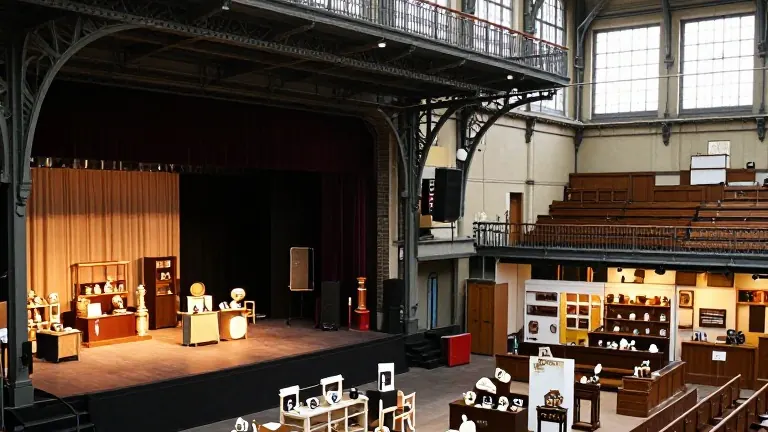
Garrison Hall, completed in 1879 and designed by Mason and Wales, served as the main site. The space was too small for the number of would-be exhibitors. The committee planned to build temporary structures on adjacent empty land, but Matheson Brothers began constructing a building on that site. The firm agreed to use its nearly complete building as an annexe, though the exhibits remained crammed.
Local businesses dominated the displays. Barningham and Co. from Dunedin installed a cast iron verandah on the stage, featuring different designs in each bay. AJ White and Co. of Christchurch exhibited an award-winning organ that was played every afternoon. The New Zealand Clothing Company, run by Hallenstein Brothers, displayed a violet velvet banner made of 13,874 white buttons. Two young women spent a fortnight attaching the buttons.
Critics noted that not all exhibits were locally made. Davis and Wanzer sewing machines arrived from North America. A painting of Port Chalmers by an unknown artist drew criticism for unrealistic proportions. A reporter described the wool and silk works of Miss Carroll as too loud and overly brilliant in color. Vincenzo Almao, a hatter who had served in Garibaldi’s army, displayed his hat-making process in a cabinet on Princes Street.
Guthrie and Larnach built an elaborate award-winning door for their hall. The door had previously been shown at exhibitions in Sydney and Melbourne. McLeod Brothers exhibited pyramids of colored soap and candles in a cabinet that had also traveled to Melbourne. The New Zealand Clothing Company used 30 wax models to display clothing, with one figure remarked to resemble the future Edward VII.
The exhibition was documented by Burton Brothers, the official photographers. Their images show the gallery views, the stage, and the crowded main floor. The Matheson Brothers building, used as the annexe, was purchased by D. Benjamin and Co. in 1888. The building is known today as Dowling Chambers. Garrison Hall remains a category 1 historic place, and its main hall is still recognizable despite adaptations for new uses.
The exhibition aimed to promote local industry and improve the quality of life in Dunedin. The failure to build the glasshouse meant the city waited until 1908 for its Winter Palace. The 1881 event relied on existing structures and the cooperation of local businesses to accommodate the diverse range of exhibits.
Source: The Star