Western Wall Rabbi Defines Jewish Mission as Sanitizing Daily Material Life
Rabbi of the Western Wall argues that physical acts like hospitality and work serve to bridge the gap between the spiritual and the material worlds.
By Emmanuel Ellis ·
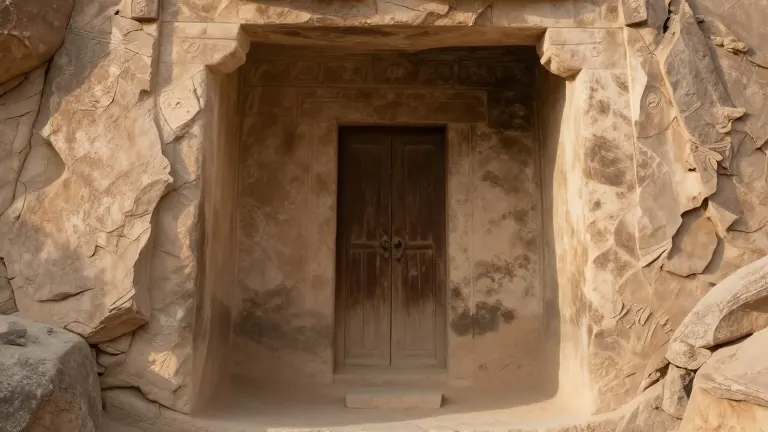
Rabbi of the Western Wall and Holy Sites asserts that the primary purpose of Jewish existence is the integration of the spiritual and the physical realms. He states that this union is the central mission of humanity, requiring believers to elevate the material world rather than escape it. The rabbi argues that when the body serves as a vehicle for spiritual obligations, the act sanctifies creation itself.
The article cites the Kotzker Rebbe’s interpretation of Psalms 115:16, which notes that while the heavens belong to the Lord, the earth was given to mankind. The rabbi explains that this distinction places a specific burden on humans to cultivate the earth and infuse it with spiritual values. He posits that the goal is to make the earthly realm function like a heavenly one through everyday actions.
Abraham, the founding Patriarch, serves as the primary historical example of this integration. The rabbi highlights a narrative from the Midrash Aggadah regarding Genesis 18:7, where Abraham chases a calf to prepare a meal. According to the text, the calf ran ahead to Hebron and entered the Cave of Machpela. Abraham followed and observed Adam and Eve lying within the cave, surrounded by candles and a pleasant fragrance.
The rabbi notes that Abraham declared the cave suitable for burial and acquired it at great expense from the Hittites. The Zohar, a text authored by Rabbi Shimon bar Yochai, identifies the Cave of Machpela as the entrance to the Garden of Eden. The text suggests that Adam, after being expelled from the Garden, requested burial near this location because he could smell the fragrance of the Garden from the cave.
The name Machpela derives from a root meaning duality. Sages explain this term as referencing the burial of couples within the site, including Adam and Eve, Abraham and Sarah, Isaac and Rebecca, and Jacob and Leah. The rabbi interprets this physical duality as a reflection of the deeper spiritual concept where the spiritual and material realms exist as complementary dimensions of a single reality.
The location in Hebron is also cited for its Hebrew name, which is associated with connection. The rabbi describes the cave as a symbol of the mission passed down from the Patriarchs and Matriarchs to make faith tangible through action. He argues that the site represents the possibility of uniting the earthly and the heavenly, similar to a ladder set on the earth with its top reaching heavenward.
The rabbi details the story of Abraham’s hospitality to three men, or angels, as a mechanism for this integration. Abraham’s instruction to his wife Sarah to knead dough and make cakes is presented as an ordinary human act that drew heavenly blessing into the world. The Midrash from Exodus Rabbah states that in the merit of this specific action, the people of Israel later received manna in the wilderness during 42 journeys.
The rabbi explains that the manna, described as the bread of the mighty, descended first in Alush. This event is directly linked to Abraham’s words, specifically the verb associated with kneading. The narrative serves to illustrate that spirituality is expressed through simple deeds such as preparing food and caring for others. The rabbi concludes that these actions invite blessing into the world, allowing daily life to become a form of sacred service.
The article emphasizes that physical life is not an obstacle to spiritual life but the means through which it finds expression. The rabbi lists family, work, relationships, and responsibilities as components of the world given by the Creator. He states that seeking higher values in these everyday actions elevates the surroundings and provides meaning, allowing individuals to experience a glimpse of a higher reality.
Source: The Jerusalem Post