Hebron factories demolished, shops lost after sudden military lockdown
Israeli bulldozers destroyed industrial sites and trapped merchants in their stores following a shooting incident, halting the region's economic output.
By Zoe Ruiz ·
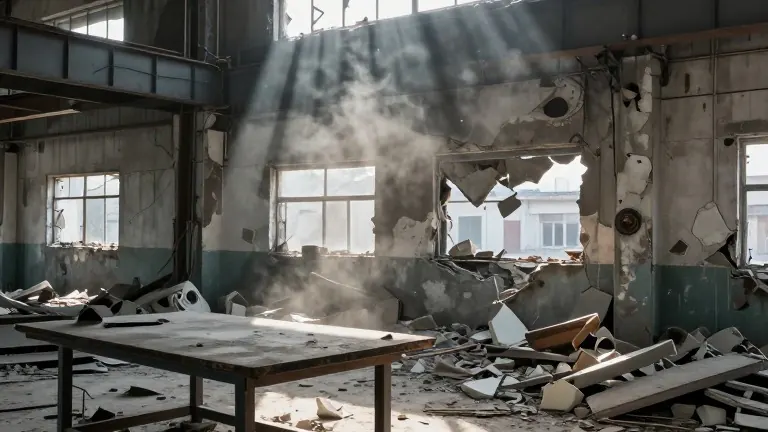
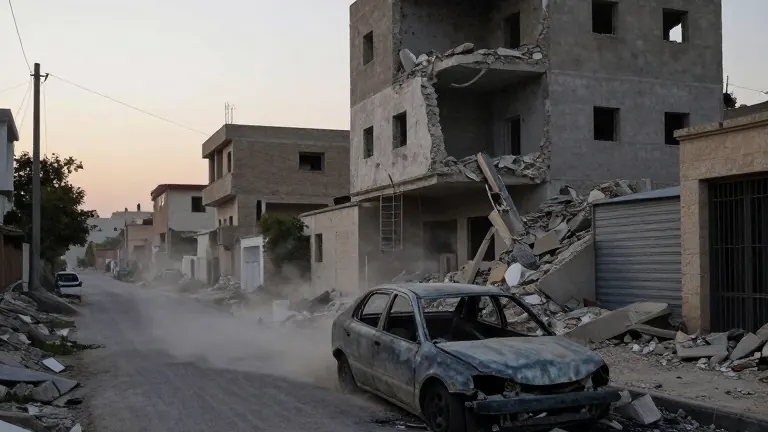
Sufyan al-Qawasmi stands near the rubble of his factories in the Farsh al-Hawa area of Hebron, looking at the debris that was once his livelihood. On Friday, Israeli bulldozers arrived without warning and leveled the structures. The action followed a shooting attack that morning near the city's western entrance, where two Israeli soldiers and two Palestinian gunmen were killed. The destruction wiped out a ceramic factory established 50 years ago and a marble factory opened 15 years later. These facilities had become one of the largest industrial operations in the West Bank, exporting goods to Israel and employing more than 70 people.
The demolition was part of a wider military response announced by Prime Minister Benjamin Netanyahu. He ordered a large-scale operation across Hebron and preparations for a wider closure of the occupied West Bank. Finance Minister Bezalel Smotrich justified the destruction as a way to establish deterrence and exact a price. Human rights groups describe such demolitions as collective punishment, often targeting family members of attackers, though al-Qawasmi was targeted for his proximity to the site.
Al-Qawasmi says he had no time to save goods from the warehouses before the machines arrived. Most of the stock remains buried under the rubble. He estimates the loss of 1,300 square metres of property, including family offices, at no less than 60 million shekels, or $19 million. He managed to save some marble slabs by storing them at friends' facilities nearby, but the bulk of the inventory is gone.
The impact extends beyond one family. The Hebron Chamber of Commerce and Industry reports that the city contributes approximately 42 percent of the Palestinian gross domestic product. It hosts more than 23,000 economic establishments, including over 5,000 industrial and artisanal facilities that employ around 40,000 workers. Sectors include stone, marble, plastics, metals, food production, leather, and glass.
Adnan al-Natsha, vice president of the Hebron Chamber of Commerce, says there are no precise figures yet for total losses. The chamber is compiling statistics on damage to businesses and homes, which are estimated in the millions of dollars. He notes that the military measures, including closures, displacements, and demolitions, have worsened the economic situation. The city already faces disruptions from an Israeli settlement in its commercial center.
Al-Natsha states that business owners could not operate because workers could not reach their jobs. The impact extends to the entire Palestinian economy. He explains that the extensive measures have paralyzed commerce, forcing employees to take alternative routes and disrupting supply chains.
Ibrahim Ahmaro, a vegetable shop owner in the al-Jalada neighbourhood, describes the sudden intrusion on Friday. He was arranging stock for the busy Saturday market when military vehicles stormed the area. Soldiers forced him to leave immediately without letting him turn on refrigeration units or retrieve his parked vehicle. He and his staff expected to be away for only a few hours but faced a total lockdown.
Ahmaro returned to his shop on Sunday morning. Soldiers attacked him inside and forced him out after he pleaded to retrieve crates. He placed the crates 400 metres away for local residents to take. He estimates his losses on that stock alone exceed 50,000 shekels, or $16,200.
Economic expert Ali Oweiwi explains that the lockdown creates challenges for establishments that rely on road access. The impact affects retail, factories, suppliers, and the transport sector. If the operation lasts more than 10 days, it could lead to accumulated goods and a decline in productivity. Oweiwi estimates losses in vehicle dismantling, spare parts, and tile shops at 70 to 80 million shekels, or $22.7 million to $26 million, alongside the seizure of dozens or hundreds of vehicles.
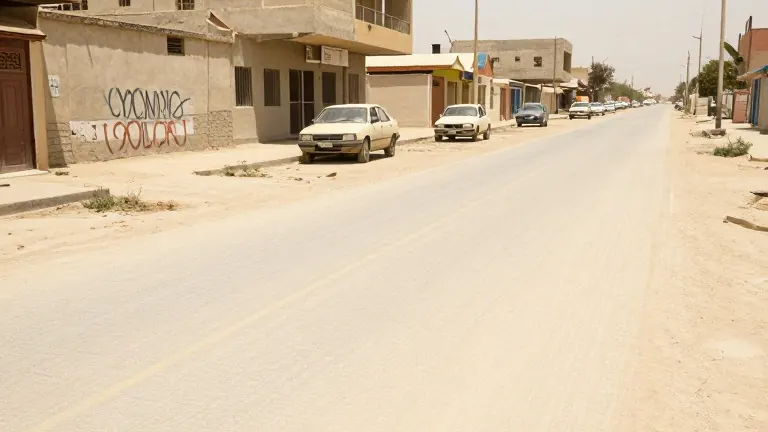
Israel has not announced an end date for the lockdown as it prepares for parliamentary elections on Tuesday. The military continues to install checkpoints, earthen berms, and concrete blocks across the city while conducting raids. The city's commercial activity remains severely disrupted, with residents and workers still unable to move freely.
Source: Al Jazeera