Deputized local officers now outnumber ICE's own deportation staff
A federal program that trains state and local police to make immigration arrests has grown rapidly, with more than 29,000 officers enrolled since January 2025.
By Zoe Ruiz ·
More than 29,000 state and local police officers have been deputized to make immigration arrests since January 2025, a figure that now dwarfs the 11,600 deportation officers employed directly by U.S. Immigration and Customs Enforcement. That count is more than double the number of local officers working with the agency eight months earlier, according to a report released by FWD.us.
The report examines 287(g), a federal program created in the 1990s that lets ICE train and authorize state and local law enforcement to enforce immigration law. FWD.us built its analysis from ICE public records and data requested by the Deportation Data Project, a research effort based at UC Berkeley and UCLA. The program saw little use until President Trump returned to office.
Officers certified through the program made more than 47,000 immigration arrests between January 2025 and August 2026. Law enforcement agencies in Florida and Texas combined accounted for about half of those arrests. Governors in both states have required local police departments to sign agreements with ICE. In some other states, the program also produced a large share of arrests. In Wyoming, officers certified under 287(g) made 77% of all immigration arrests in the state in April 2026, and more than 60% every month since November 2025. New Hampshire recorded 60% of its immigration arrests through the program in June 2026, and Oklahoma reached close to 50% that same month.
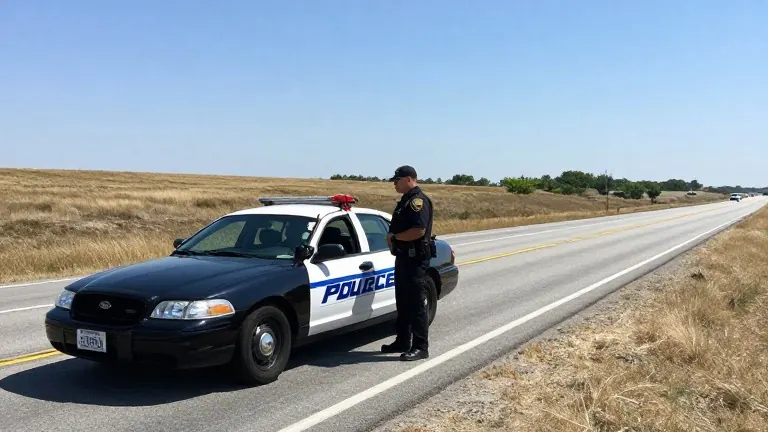
The Oklahoma Highway Patrol enrolled all of its troopers in the program, giving them the authority to stop drivers on state highways and potentially take them into custody on immigration grounds. Gabriela Ramirez-Perez, an immigration and economic security policy analyst with the Oklahoma Policy Institute, said residents have responded by changing how they move around the state. "We can say that it's definitely resulting in a lot of fear in immigrant communities. People are changing their day to day routines to try to avoid getting on the highway, to try to avoid driving as much as possible," Ramirez-Perez said.
The most common version of these agreements, called the Task Force Model, allows police and sheriff's departments to make immigration arrests directly. Agencies that stay in active participation under their signed agreements receive money for new cars, equipment and other enforcement resources. The Department of Homeland Security has said the program is a critical tool for reducing crime and illegal immigration.
Money has flowed to departments that take part. The Justice Department earlier this summer offered $3 billion in funding for state and local agencies that join the program, with the money available for staffing and equipment in coming years. Florida has already directed hundreds of millions of dollars to law enforcement agencies in the state in exchange for their participation.
Felicity Rose, vice president of research and policy at FWD.us, said the funding appears to be driving the growth in participation. She also said the program has changed how enforcement is carried out. "These state and local officers are a key lever in the administration's quieter approach to enforcement. They're trading what used to be splashy urban surges, which we saw in Chicago and Minneapolis, for just routine highway stops now under the 287(g) program," Rose said.
Source: Central Florida Public Media