
West Virginia Data Center Plan Faces Local Pushback
Residents in Tucker County worry a new facility will ruin dark skies and repeat the region's history of extractive industries.
By Hiroshi Davis ·
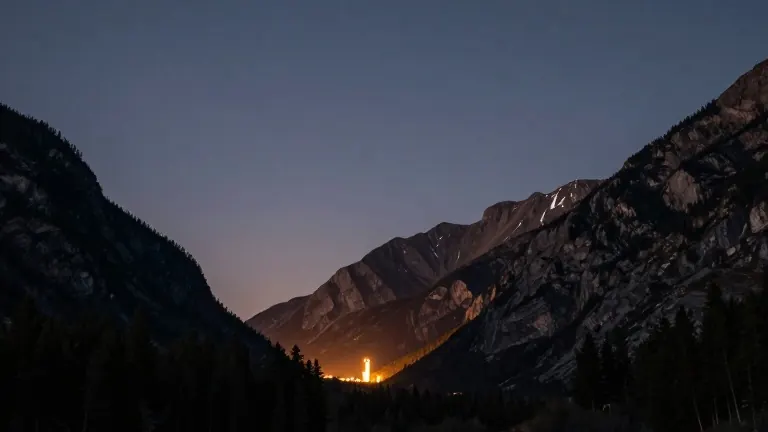
A proposed data center in West Virginia has sparked a local dispute over land use and environmental protection.
Fundamental Data LLC, based in Purcellville, Virginia, plans to build the Ridgeline facility in Tucker County. The project includes a 785-megawatt power plant and a data center campus designed for artificial intelligence and cloud computing. The initial footprint covers 291 acres on a reclaimed coal mining site, with plans to expand to 10,000 acres over time.
The site is located in the Monongahela National Forest, an area known for its dark skies and outdoor recreation. Casey Chapman, the company's responsible individual, stated that the facility will use natural gas as its primary fuel and diesel as a backup. He said the company will use well-designed lighting to minimize sky glow, a key concern for nearby Blackwater Falls State Park.
An analysis by the Northern Virginia Astronomy Club found the project could increase sky glow near Blackwater by 528 percent. This change would make the night sky resemble a suburban area rather than a rural one. Chapman noted that safety and security are priorities for the 24-hour industrial plant, which requires proper lighting for crews to operate equipment.
Local residents view the project through the lens of the region's past. Davis, once called Stump Town due to extensive logging, later suffered from coal mining that acidified the Blackwater River. Kim Williams, president of the Snow Sports Museum of West Virginia, described the historical clear-cutting of the valley. Residents fear the new tech boom will undo the progress made in restoring the landscape.
The state legislature passed a bill in April 2025 exempting certified microgrid districts and data centers from local zoning restrictions. The bill removed local controls over noise, lighting, and land use. Governor Patrick Morrisey signed the legislation, citing the state's need for economic development and job creation.
Tucker United, a grassroots group, collected 1,000 signatures urging the governor to veto the bill. They also challenged the state Department of Environmental Protection's approval of the air-quality permit. Opponents commissioned a study estimating the plant could cause between $19 million and $35 million in annual health-related damages. The Department of Environmental Protection declined to comment on active litigation.
Chip Chase, founder of White Grass Ski Touring Center, said visitors come to the area for dark skies and quiet recreation. He described the community as Vermont with Southern hospitality. John Deskins, a director at West Virginia University, said data centers are a good opportunity if the state follows proper procedures for noise and water pollution.
Fundamental Data claims the project will create about 500 permanent jobs in IT, electrical, and security fields. A Brookings Institution study found data centers typically produce 100 to 200 permanent jobs. Gary Berti, a retired homeowner in Davis, noted that the state needs jobs but expressed skepticism about the long-term impact. He pointed out that House Speaker Roger Hanshaw serves as lead attorney for Fundamental Data in the permit dispute, a relationship Hanshaw confirmed in an email.
The legal challenge against the air permit was dismissed in August on jurisdictional grounds. Tucker United and other groups plan to appeal to the state Supreme Court. Nikki Forrester, a spokesperson for Tucker United, said the group believes the legislation removed necessary guardrails for development. She expressed concern over storing 30 million gallons of diesel near a creek that feeds local water supplies.
Source: NPR
More Business · Bad Service · Report a business · Got a Story?