Meta Runs Google TPUs in Production for the First Time
The move breaks Google chips out of its own software ecosystem and targets Nvidia's grip on AI hardware.
By Zoe Ruiz ·
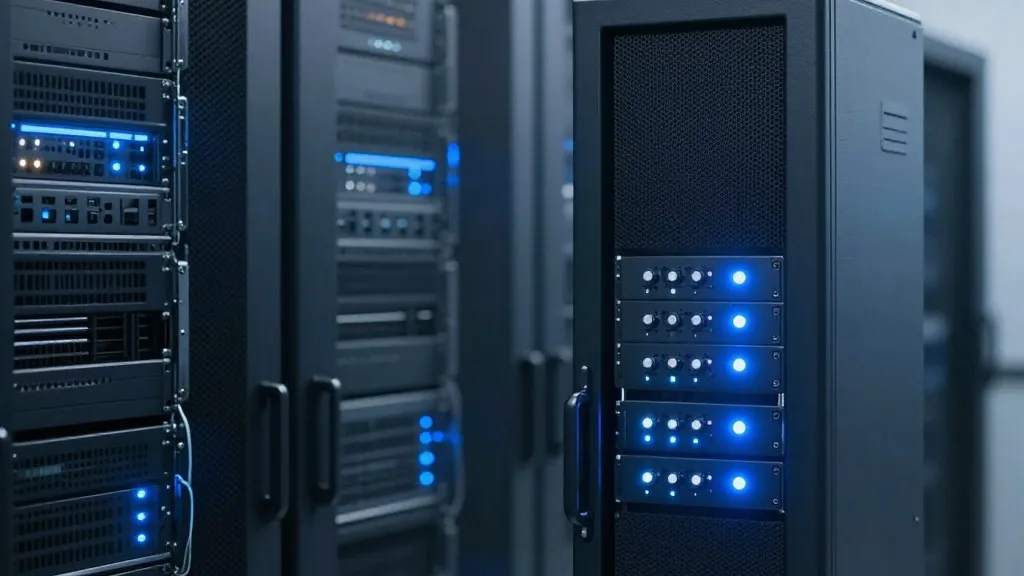
Google’s custom AI chips are now running production workloads for Meta. The two companies announced that a new version of the SGLang inference engine now works natively with PyTorch on Google’s tensor processing units. This marks a major shift because Meta can now use the hardware without rewriting its code for Google’s preferred JAX framework. A similar update for vLLM, another popular engine, was also released as open source.
The path to this moment began years ago. From 2020 to 2023, Meta research teams used Google TPUs through an older bridge called PyTorch/XLA. Those contracts were eventually canceled. Google has since focused on making TPUs easier for PyTorch users, a group that mostly did not want to migrate to JAX. The new TorchTPU stack is described as a successor to that older bridge. Meta’s lead on the project, Zongwei Zhou, said the collaboration was a close three-way effort involving Meta, Google, and the SGLang team.
Jana van Greunen, Meta’s director of PyTorch engineering, emphasized the strategic value of the change. She stated that Meta cannot be constrained by a single hardware architecture. The new stack allows the company to deploy its PyTorch workloads directly to Google TPUs. This flexibility is crucial as AI compute demands grow and companies seek alternatives to dominant market players.
The timing of the announcement is notable. It came one day after Amazon revealed it was open-sourcing TorchNeuron. That is Amazon’s native PyTorch backend for its Trainium chips. Both moves appear designed to loosen Nvidia’s software lock-in. By making other hardware easier to use with the standard AI framework, Google and Amazon are chipping away at the monopoly Nvidia holds in the data center.
Performance figures show the new setup is competitive. A tuned vLLM configuration served a massive 2.8-trillion-parameter model from Moonshot AI at speeds topping 700 tokens per second for a single user. This test used seven-generation Ironwood TPUs with speculative decoding. In comparison, Nvidia’s GB200 chips reached 452 tokens per second in a similar setup. At smaller batch sizes without speculative decoding, the new kernels deliver roughly 1.4 to 2 times the throughput of the Nvidia baseline.
The partnership is expanding quickly. SGLang-TorchTPU will add support for more models, starting with DeepSeek V4.1 Flash and Reflection Beam. The team aims to provide day zero support for new open models by the first quarter of 2027. This means the chips will be ready to run new AI releases on the day they launch. More details will be shared at the SGLang Summit in San Francisco in November.
There is still some uncertainty about the physical location of Meta’s production TPUs. Reports from last year suggested talks included rentals in 2026 and purchases in 2027. Meta reportedly signed a multi-year rental agreement. Regardless of the specific data center locations, the software integration is complete. Meta is now using the hardware in live production environments.
Source: Tom's Hardware · original report published