Cardinals Use No. 3 Pick on Running Back Jeremiyah Love
Arizona selected the Notre Dame back in the 2026 draft, a move that cost them top offensive line prospects.
By Zoe Ruiz ·
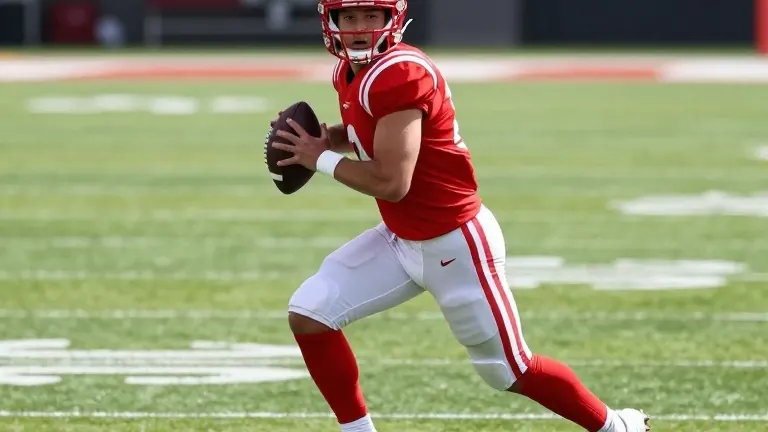
Arizona head coach Mike LaFleur used the third overall selection in the 2026 NFL Draft on Notre Dame running back Jeremiyah Love. The decision prioritized a position often viewed as a secondary element of offense over the offensive line. LaFleur is in his first year as head coach and focused on building the roster around specific foundational players.
Love has appeared in five games this season before suffering a high ankle sprain. He has played 34.4% of offensive snaps through Week 7. In that limited action, he has rushed for 245 yards on 67 carries and one touchdown. He also caught 11 passes for 36 yards and one score. Free agent Tyler Allgeier has shared the workload.
At 6 feet and 212 pounds, Love is an upright runner. He waits for blocks to develop and shows patience. TruMedia data shows Love has a 6.0% tackle avoidance rate. That figure is the lowest among running backs with at least 50 carries.
The opportunity cost of the pick is visible in the draft board. Spencer Fano was the highest-drafted offensive tackle. Arvell Reese was another top prospect on the board. Love’s contract is the fourth-highest in value among running backs. It also features the largest guarantee at his position. By comparison, Carnell Tate, selected one pick after Love, has a contract value that ranks 10th among wide receivers.
The Cardinals are 2-5 on the season. The team faced a similar debate in 2025 when Las Vegas took Ashton Jeanty with the sixth pick. The Raiders were worse the following year. The current approach suggests a running back is a finishing touch for an offense. This strategy works best when the offensive line is stable and the quarterback can threaten the deep ball.
Love is projected to be a key contributor during his rookie contract. Teams are increasingly extending running backs beyond their rookie years. Players are staying on the field into their late 20s and early 30s. This trend has reduced the concern about player longevity. The value of the position rises as the run game becomes more central to offensive schemes.
Source: CBS Sports